
Mastering Residential Zoning: How to Balance Hospitality with Privacy التصميم المعماري للمنازل: فن توزيع...
A Strategic Approach to Architectural Layouts
In residential architecture, the success of a floor plan is not measured by square footage alone, but by how well it functions for its inhabitants. The most critical aspect of this functionality is “Zoning”—the deliberate division of space to separate public interaction from private living.
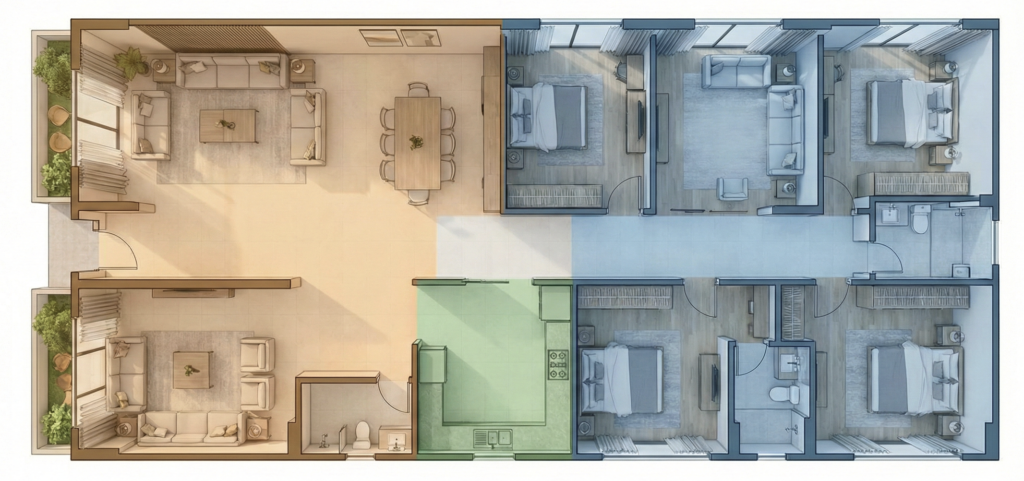
What is Architectural Zoning? Zoning is the process of organizing spaces based on their function and the level of privacy required. A well-designed home typically consists of three primary zones:
The Public Zone (Day Zone): This area includes the reception, dining room, and guest restroom. It is the “face” of the house, designed to welcome visitors without compromising the sanctity of the private quarters.
The Private Zone (Night Zone): This includes bedrooms, bathrooms, and often a family living room. This zone requires acoustic isolation and visual privacy. A guest sitting in the reception should never have a direct line of sight into a bedroom door.
The Service Zone: The kitchen, laundry, and storage areas. The strategic placement of the kitchen is vital; it must serve the dining area (Public) while remaining accessible to the family (Private) without crossing through guest areas.
The Art of Transition: Circulation Paths The separation is achieved through “Circulation.” As architects, we design transition spaces—lobbies, corridors, or foyers—that act as buffers. A well-placed foyer allows a family member to enter the house and reach their room without passing through a formal gathering in the reception.
Conclusion Privacy is not a luxury; it is a fundamental requirement for a comfortable home. By applying proper zoning principles from the initial design phase, we ensure that your home remains a sanctuary for your family, while still being a welcoming space for your guests.
عندما نتحدث عن تصميم “بيت العمر”، يركز الكثيرون على الديكور والألوان، لكن الأساس الحقيقي لراحة الساكنين يكمن في “التصميم المعماري” وتوزيع المساحات، أو ما نطلق عليه هندسياً “التقسيم الوظيفي”. المشكلة الأزلية في البيوت المصرية هي كيفية تحقيق المعادلة الصعبة: إكرام الضيف بوجود مساحة استقبال لائقة، وفي نفس الوقت الحفاظ الكامل على خصوصية أهل البيت.
ما هو التقسيم الوظيفي ولماذا هو الأهم؟ التقسيم الوظيفي هو توزيع المسقط الأفقي للمنزل إلى مناطق محددة، بحيث لا تتداخل الأنشطة المختلفة مع بعضها. البيت الناجح معمارياً ينقسم عادة إلى ثلاثة أجزاء رئيسية:
1. منطقة الاستقبال (المنطقة العامة):
وهي المنطقة المخصصة للضيوف (الصالون، السفرة، حمام الضيوف). القاعدة الذهبية هنا هي أن تكون هذه المنطقة قريبة من مدخل الشقة، بحيث لا يضطر الضيف للمرور في ممرات طويلة تكشف باقي البيت.
2. منطقة المعيشة والنوم (المنطقة الخاصة):
وهي “حرم البيت” (غرف النوم، المعيشة الداخلية، الحمامات الرئيسية). التحدي هنا هو “العزل البصري والصوتي”. يجب أن يتم تصميم الممرات بحيث يستحيل على الجالس في الصالون أن يرى باب غرفة النوم أو الحمام الخاص بالأسرة حتى لو كان الباب مفتوحاً.
3. منطقة الخدمات:
المطبخ هو القلب النابض الذي يخدم المنطقتين. التصميم الذكي يجعله قريباً من السفرة لسهولة التقديم، وفي نفس الوقت معزولاً بروائح الطبخ وصوت الأواني عن غرف النوم والاستقبال.
السر في “الموزع” ومسارات الحركة الحل السحري دائماً يكمن في تصميم “ردهة مدخل” أو موزع حركة ذكي عند باب الشقة. هذا الموزع يسمح لأي فرد من الأسرة بالدخول والتوجه لغرفته مباشرة دون الاحتكاك بمنطقة الضيوف. هذه التفصيلة الصغيرة قد تغير نمط حياتك بالكامل وتوفر لك الراحة النفسية داخل منزلك.
في النهاية، التصميم الجيد هو الذي يحترم خصوصيتك ويشعرك بالأمان داخل مساحتك الخاصة، دون أن يعزلك عن واجبات الضيافة.
Minimal Style الطراز المينيمال
The minimal style الطراز المينيمال(الحد الادني) Minimal interior design is a style that is...
Bathroom Dimensions
The minimal style الطراز المينيمال(الحد الادني) minimal vs modern style Minimal and modern interior...
The Luxury of Vertical Space: Mastering High Ceilings
The Luxury of Vertical Space: Mastering High Ceilings سحر الأسقف العالية: سر الفخامة وكيفية...