
The Luxury of Vertical Space: Mastering High Ceilings

سحر الأسقف العالية: سر الفخامة وكيفية التعامل معها

 Throughout history, from ancient temples to modern penthouses, high ceilings have always been synonymous with grandeur and luxury. But why does vertical space affect us so deeply? And more importantly, how do we design for it without making the space feel cold or cavernous?

The Psychology of Height Architecturally, high ceilings facilitate better ventilation and natural light distribution. Psychologically, they promote a sense of freedom and creativity. A room with a standard height feels functional, but a room with extended height feels aspirational.

Design Challenges & Solutions While beautiful, tall spaces come with their own set of challenges. Here is how we address them professionally:

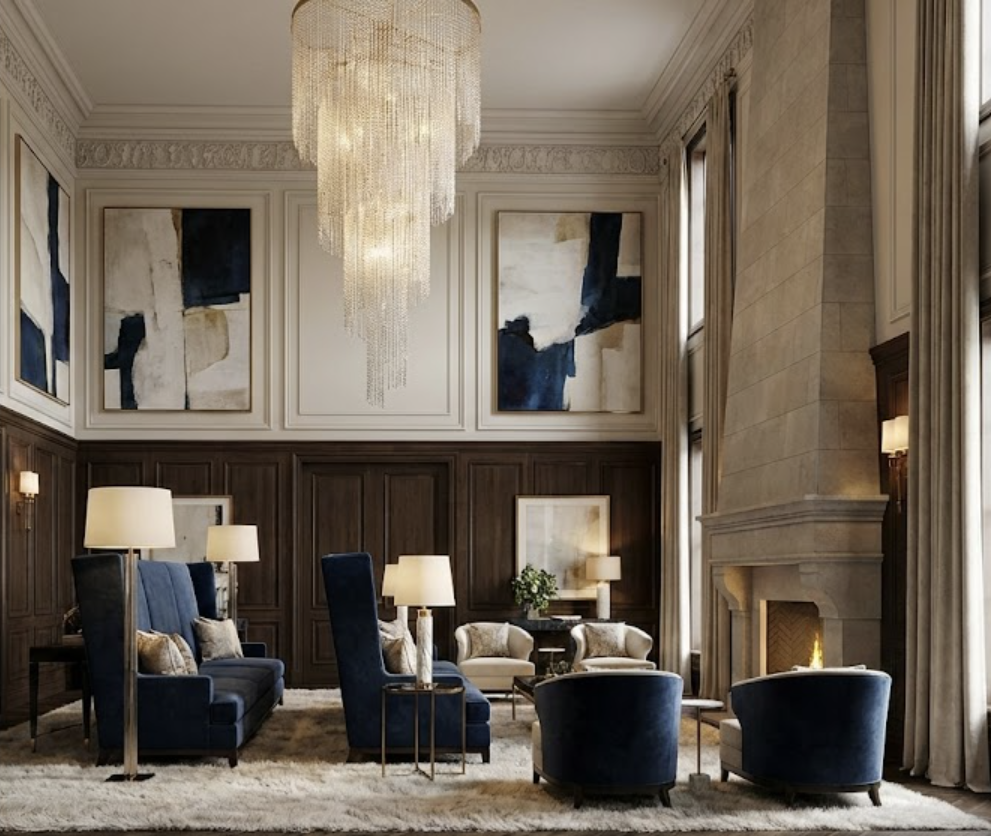
  1. Scale and Proportion: Furniture must match the scale of the room. Standard-sized furniture can look miniature in a high-ceilinged room. We often use taller seat backs, imposing artwork, and oversized accessories to bridge the gap.

  2. The “Rule of Thirds” for Walls: Leaving a tall wall completely blank is a design error. We visually divide the wall into three horizontal sections (bottom, middle, top) using paneling, artwork, or architectural moldings to bring the scale down to a human level.

  3. Lighting Strategy: Lighting is crucial. A single ceiling fixture is insufficient. We utilize cascading chandeliers to fill the upper void and layer them with wall sconces and floor lamps to create a warm ambiance at the seated level.

  4. Acoustics: High ceilings can cause echoes. To mitigate this, we incorporate sound-absorbing materials like plush rugs, heavy drapery, and upholstered wall panels.

Conclusion High ceilings are a valuable asset in any property. With the right design approach, they can transform a house into a palace, offering an unmatched sense of openness and elegance.

منذ قديم الأزل، ارتبطت الفخامة دائماً بالارتفاع. من المعابد القديمة وحتى القصور الحديثة، دائماً ما يعطي السقف المرتفع إحساساً بالهيبة والاتساع لا يضاهيه شيء آخر. ولكن، التعامل مع هذه المساحات الرأسية يتطلب حكمة هندسية ولمسات مدروسة حتى لا يتحول المكان من “فخم” إلى “موحش” أو بارد.

لماذا نعشق الأسقف العالية؟ المسألة ليست مجرد شكل جمالي؛ السقف المرتفع يعني تهوية أفضل، إضاءة طبيعية أكثر، وإحساساً نفسياً بالحرية وعدم الانقياد. هندسياً، الارتفاع يعطي للمصمم فرصة للإبداع في تشكيل الفراغ واستخدام عناصر ديكورية ضخمة لا يمكن استخدامها في الشقق العادية.

كيف نتعامل مع الارتفاع بذكاء؟ رغم جمالها، تمثل الأسقف العالية تحدياً في الفرش والتصميم. إليكم أهم القواعد التي نتبعها:

1. معالجة الحوائط: الخطأ الأكبر هو ترك الحائط الطويل فارغاً تماماً. يجب تقسيم الحائط بصرياً (باستخدام البانوهات، أو ورق الحائط، أو التكسيات الخشبية) لكسر حدة الارتفاع وجعل المكان مريحاً للعين.

2. حجم الأثاث والإضاءة: في الفراغات العالية، لا يصح استخدام قطع أثاث صغيرة أو منخفضة لأنها ستظهر ضئيلة جداً. نستخدم دائماً نجفاً ضخماً متدلياً لملء الفراغ العلوي، وستائر تبدأ من أقصى نقطة في السقف وتصل للأرض لتأكيد الفخامة.

3. الصوت والصدى: المساحات العالية غالباً ما تعاني من مشكلة صدى الصوت. الحل يكمن في استخدام “الخامات الماصة للصوت” مثل السجاد السميك، والستائر الثقيلة، وتنجيد الحوائط في بعض الأجزاء.

الخلاصة: السقف المرتفع هو كنز معماري إذا تم استغلاله بشكل صحيح. هو الفرصة الحقيقية لتحويل منزلك إلى تحفة فنية تنبض بالفخامة.